Quiet NIS 145 Million Deal Consolidates a King David Street Landmark
A Landmark Acquisition Built in Stages
An unusual real estate transaction has recently come to light in Jerusalem’s ultra-prime market: a Haredi businessman from New York has quietly acquired nearly an entire landmark building on King David Street for a total consideration of approximately NIS 145 million.
The buyer, David Gefner, executed the acquisition in stages over nearly two years, gradually consolidating control over a preserved historic building at 28 King David Street, one of the city’s most prestigious and sought-after addresses.
Why 28 King David Street Is So Coveted
King David Street, located in the Talbiya neighborhood, is among Jerusalem’s most iconic thoroughfares, forming a central axis between the city center and southern Jerusalem. The street is home to major public institutions, luxury hotels including the King David Hotel, David Citadel and Waldorf Astoria, as well as residential towers and landmark properties such as the YMCA building. It is also within short walking distance of key cultural, commercial and service centers.
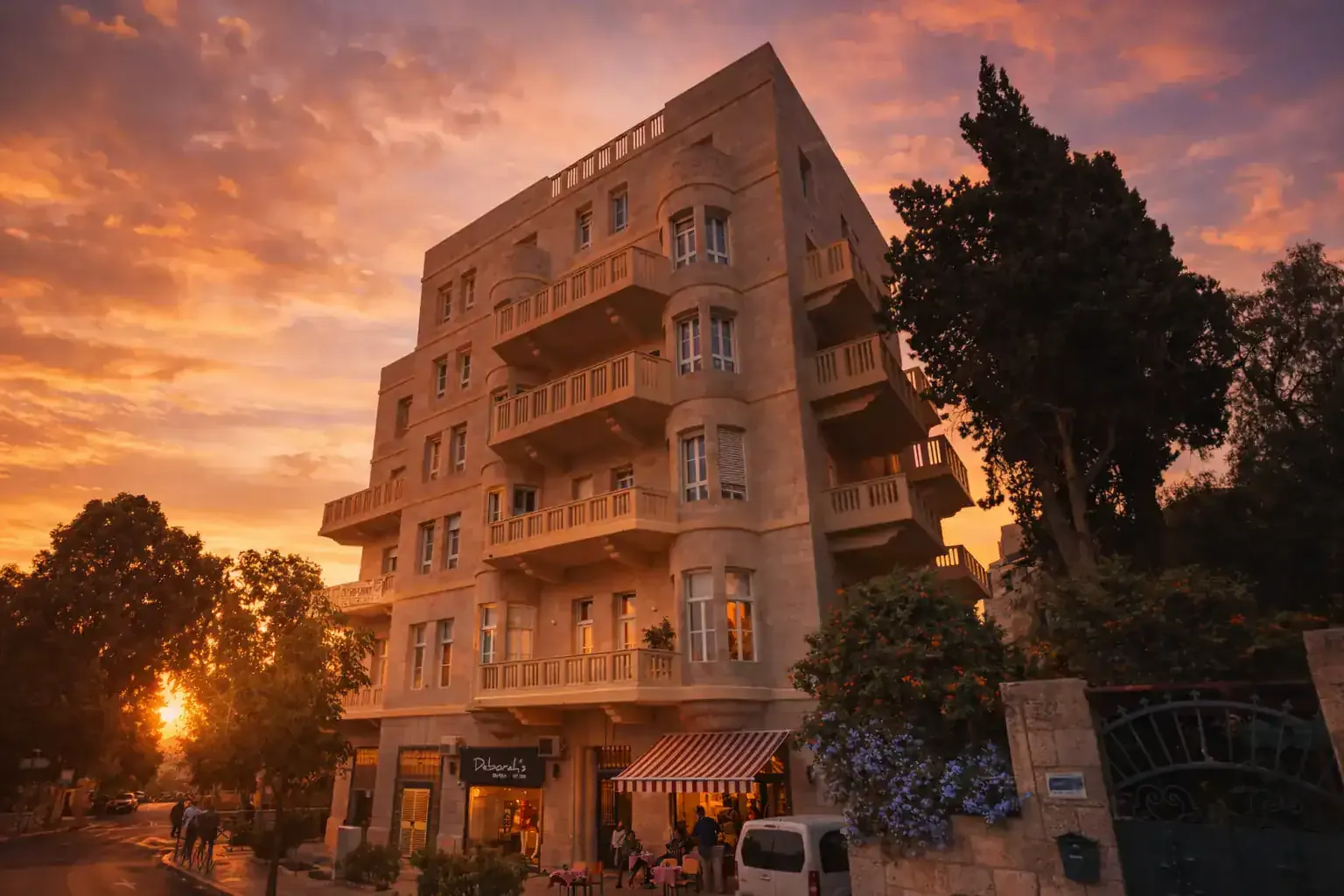
The building itself is an imposing stone structure dating back to the 1920s, reflecting the architectural style characteristic of Talbiya during the British Mandate period. Over the past decade, it underwent a substantial expansion while preserving its original architectural character, including the addition of new floors, an elevator and an underground parking garage. Today, the property comprises six floors with six residential apartments and several commercial units, totaling roughly 3,000 square meters of built area.
Successive Purchases Lifted the Price Per Square Meter
Gefner first entered the building in 2024, completing two initial transactions for apartments on the third and fourth floors. Each unit spans approximately 350 square meters, and the deal also included exclusive use of the building’s roof, which serves as a 240-square-meter terrace. The combined value of these acquisitions stood at around NIS 43 million, reflecting an implied price of roughly NIS 58,000 per square meter, considered at the time to be in line with market levels given the building’s preservation status, location and rarity.
Since then, Gefner has steadily expanded his footprint. In July, he acquired two additional apartments on the fifth and sixth floors: one measuring approximately 310 square meters with a 40-square-meter balcony, and a second unit of around 200 square meters with an attached 213-square-meter roof terrace. The upper unit functions as a penthouse. The transaction was executed as a rapid, pre-receivership sale and completed as a package deal for NIS 46.1 million, reflecting an implied price of roughly NIS 78,000 per square meter.
Additional transactions followed over the year. These included the purchase of a residential unit together with a commercial space totaling about 68 square meters for NIS 4.7 million, approximately NIS 70,000 per square meter. A 180-square-meter garden apartment was sold for NIS 18.5 million, while another residential apartment of roughly 330 square meters was sold for about NIS 40 million, around USD 11 million, reflecting a price of around NIS 100,000 per square meter. As a result, nearly the entire building has now been acquired, with the exception of three commercial units, for which negotiations are ongoing.
A Private Holiday Base and Long-Term Investment
The transactions were brokered by the Jerusalem-based Oren Cohen Group. Sources close to the buyer say that some of the apartments will serve as holiday residences for Gefner and his family, particularly during Jewish holidays. A significant investment is also expected in combining two floors internally, creating a residence of approximately 700 to 800 square meters. The remaining apartments are expected to be renovated and leased.
A Trophy Asset in Jerusalem’s Ultra-Prime Market
According to real estate appraiser and economist Hizkia Haetzni, certain properties are effectively “money properties,” assets the soul desires, which makes them extremely difficult to price. While individual apartments can be appraised separately, purchasing an entire building is a completely different type of transaction, almost impossible to estimate precisely. Professionals in this market know that prices here typically range between NIS 80,000 and NIS 130,000 per square meter. In the adjacent building, penthouses are currently marketed at around NIS 100,000 per square meter, and a nearby off-plan sale recently closed at similar levels.
David Gefner, in his 30s, is an American ultra-Orthodox businessman and investor, listed as the founder of the Perigrove investment fund, which is active primarily in the investment and healthcare sectors. He also serves on the boards of several companies, including Gentell LLC, a firm operating in the field of health technologies.
Gefner is regarded as well connected within New York’s economic and business elite. During the mayoral campaign of Zohran Mamdani, senior figures from the worlds of finance and business reportedly convened at Gefner’s private luxury apartment in Central Park to discuss strategies aimed at blocking Mamdani’s rise.
In recent months, Gefner’s name has also been linked to Rabbi Yaakov Aryeh Alter, leader of the Gur Hasidic dynasty, who embarked on a large-scale fundraising campaign in the United States. Media reports at the time noted that the rabbi traveled aboard the private aircraft of donors Joel Landau and David Gefner. Among those on the flight was Moti Babchik, chief of staff to Housing and Construction Minister Yitzhak Goldknopf and a central figure in the coalition dispute surrounding Israel’s conscription legislation.
People close to Gefner confirmed the estimated total value of the transaction and explained that the acquisition was executed gradually, over an extended period and in multiple stages. They said the deal evolved over time, with the building sold in parts and each unit negotiated separately. The process began when the buyer was searching for an unusually large residential apartment in the area and then seized the opportunity to acquire two full floors, one above the other. Not all of the apartments were available at the outset, and each purchase was handled independently, resulting in a slow, staggered acquisition that began with the upper floors and progressed downward.